
What is fiscal drag and how is it quietly eating your pay rise?
Most people have never heard of fiscal drag, but it's probably costing you hundreds of pounds a year – and you'd never notice it happening. To understand why, we need to start with something that affects all of us: inflation.
Inflation is when prices go up
Inflation is the gradual increase in prices over time. That coffee that cost £2.50 a few years ago now costs £3.20 (remember when mars bars cost 30p?). Your weekly shop creeps up. Your rent increases. Everything gets a little more expensive, year after year.
This isn't a mistake – it's by design. Think about it: if you knew prices would be lower next year, would you buy a car today? A house? Probably not. You'd wait. And so would everyone else. A little inflation – around 2% a year – stops that paralysis and keeps the economy moving.
The pay rise you need just to stand still
If prices rise by 3% but your salary stays the same, you've effectively taken a pay cut. Your £40,000 salary buys less than it did last year.
This is why pay rises matter – and why "inflation-matching" pay rises aren't really raises at all. They're just keeping you in the same place. A 4% pay rise when inflation is 4% means your spending power hasn't changed. You're not richer. You can just afford the same stuff as before.
Most employers understand this. Annual pay reviews, cost-of-living adjustments, incremental rises – they exist because everyone accepts that wages need to rise roughly in line with prices. Otherwise, workers get poorer every year while doing the same job.
You'd expect tax thresholds to follow the same logic
If wages rise with inflation, and that's normal and expected, then you'd assume tax thresholds would rise too. Otherwise, the same "real" income gets taxed more heavily each year, in effect reducing your spending power versus that of prior years. Prices have increased, your income has followed, but your tax rates haven't.
The personal allowance – the amount you can earn before paying any income tax – is £12,570 today. If that threshold had risen with inflation since 2021, it would be around £15,480 by now. The higher rate threshold (where you start paying 40%) would be around £60,300 – instead, it's £50,270.
Historically, the Chancellor did increase these thresholds. Not always perfectly in line with inflation, but they moved. The personal allowance rose from £6,475 in 2010 to £12,570 in 2021. That's roughly doubling over a decade.
Then they stopped.
Fiscal drag: what happens when thresholds freeze
Since April 2021, UK tax thresholds haven't moved. And they won't until at least April 2031 – a full decade of frozen thresholds.
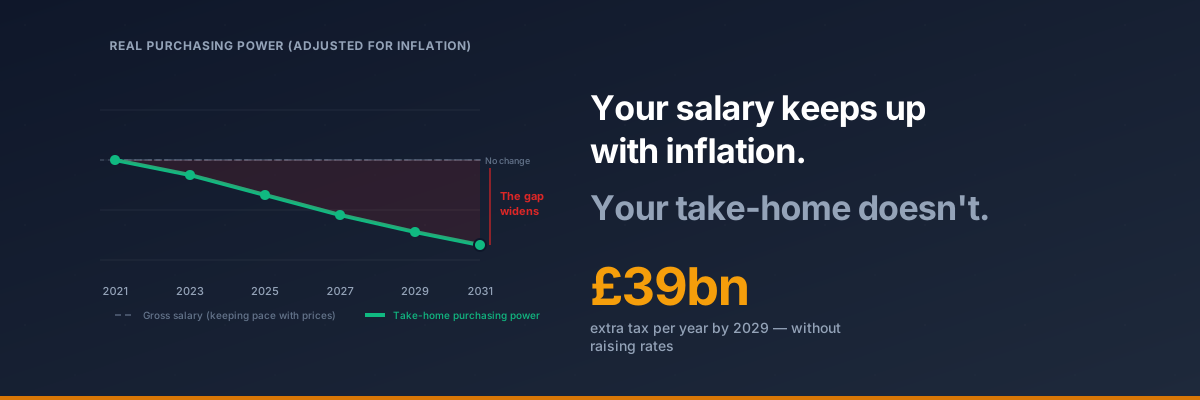
This is fiscal drag. Your wages rise, but the tax bands stay fixed. So you get pushed into higher tax brackets not because you're genuinely earning more, but because the goalposts haven't moved.
The current thresholds look like this:
| Threshold | Amount (2025/26) | Tax Rate Above |
|---|---|---|
| Personal Allowance | £12,570 | 20% |
| Higher Rate | £50,270 | 40% |
| Additional Rate | £125,140 | 45% |
These numbers are identical to 2021. They'll be identical in 2031. Ten years of frozen thresholds is a serious hit to UK household budgets.
Use the Salary Calculator to see where you sit relative to the thresholds.
The invisible tax rise
Fiscal drag is so effective because people rarely see it happening. When the government raises tax rates, it's front-page news. People notice. There's political backlash. Manifestos make promises about not raising income tax because governments know how unpopular this is.
But fiscal drag? You see your salary go up. You see slightly more money hitting your bank account each month. It feels like progress. What you don't see is the counterfactual – what you would have received if thresholds had risen normally. You don't notice the extra few hundred quid quietly siphoned off because you've crept into a higher band. There's no line on your payslip that says "fiscal drag: -£97 this month." It just vanishes into the general deductions.
Some people get hit harder than others
Fiscal drag doesn't affect everyone equally.
Hardest hit
- People earning just under £50,270 who get pushed into the 40% band. A small pay rise can suddenly mean 40% tax instead of 20%.
- Those earning just under £100,000 face an effective 60% marginal rate between £100,000 and £125,140 as they lose personal allowance. Fiscal drag pushes more people into this trap every year.
- Parents of under-fives in England, who lose their working-parent funded hours and Tax-Free Childcare the moment one parent goes a pound over £100,000. Three and four year olds keep the universal 15 hours, which are not income tested. That threshold has not moved since 2017 either.
- Pensioners whose state pension rises with the triple lock, while the personal allowance stays frozen – more retirees are becoming taxpayers for the first time.
Less affected
- Very high earners (£200k+) already maxed out on rates – fiscal drag doesn't change much for them.
- Anyone whose income isn't rising (or is falling) isn't being dragged anywhere – though they'll feel inflation instead.
The cruel irony is fiscal drag hits middle earners hardest. People getting modest cost-of-living raises just to keep up. Their real purchasing power hasn't increased. But their tax bill has.
The £100,000 line is where this gets strangest, because two frozen thresholds sit on top of each other there. One is the personal allowance taper, which takes your allowance gradually. The other is childcare, which takes most of it at once: a family with two children under five loses the working-parent hours and Tax-Free Childcare on the first pound over, keeping only the universal 15 hours a three year old gets whatever the household earns. We worked that family through in the £100k childcare cliff, and the drop is larger than most people expect.
The numbers are genuinely staggering
The Institute for Fiscal Studies estimates that frozen thresholds will raise £39 billion in additional tax take per year by 2029/30. To put that in perspective, that's roughly the same as increasing all income tax rates by 3.5 percentage points. Except nobody voted for it.
By the time the freeze ends in 2031:
- Around 920,000 additional workers will have been dragged into the 40% tax band
- 24% of all taxpayers will pay higher or additional rate tax, up from 15% in 2021/22
- Someone on £50,000 could pay around £8,000 more in total tax over the freeze period than they would have under inflation-adjusted thresholds
The ICAEW calculated that if the personal allowance had risen with inflation, it would be £15,480 for 2025/26. The £2,910 gap means anyone earning above that threshold is paying at least £582 more in income tax this year alone.
And this compounds. Every year the freeze continues, the gap between where thresholds are and where they "should" be grows wider.
So what can you actually do?
You can't change government policy. But you can reduce your taxable income – and that's the only real defence against fiscal drag. It won't make you richer today, but it means less of your money goes to tax and more goes somewhere useful (like your pension).
Pension contributions via salary sacrifice
Marriage Allowance
Salary sacrifice for other benefits
Know where you stand
The bottom line
Fiscal drag is a tax rise that doesn't look like a tax rise. Your wages go up, your tax bill goes up faster, and the gap between them gets quietly pocketed by the Treasury.
The thresholds aren't changing until 2031. Your wages probably are. The only question is whether you're going to plan for it or let it happen to you.
Check where you stand: Salary Calculator
References
- How are frozen tax thresholds reshaping who pays personal taxes? (accessed November 2025)
- Fiscal drag: An explainer (accessed December 2025)
- Budget: Freeze on personal allowance extended (accessed November 2025)