
How Much Tax Will I Pay on My Bonus in 2025/26?
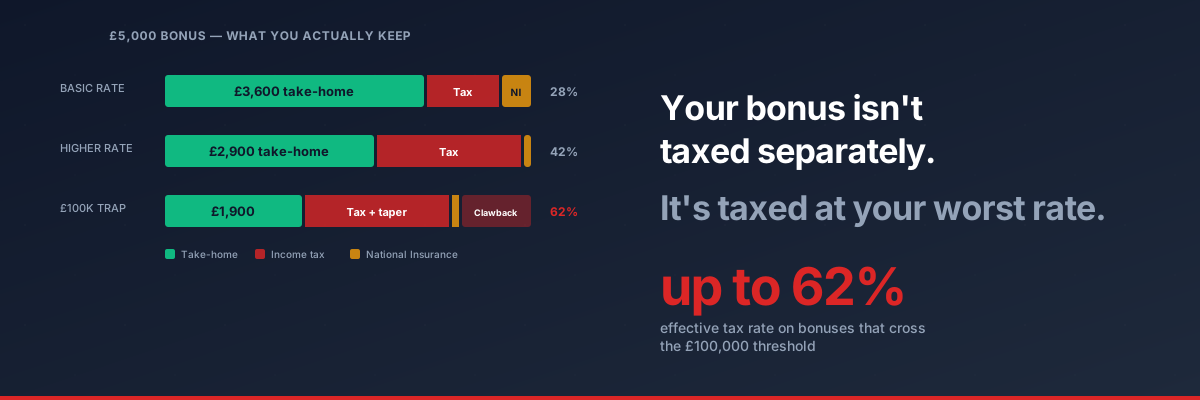
A £5,000 bonus doesn't mean £5,000 in your pocket. If you're a basic rate taxpayer, you'll take home around £3,600. If you're a higher rate taxpayer, that drops to roughly £2,900. Here's why - and what you can do about it.
The Quick Answer
Your bonus is taxed at your marginal rate - the highest rate you're currently paying. It's not taxed separately or at a special "bonus rate." Your salary has already used up your personal allowance and lower tax bands, so your bonus sits on top and gets hit at whatever rate comes next.
For most people, that means:
Use the Bonus Tax Calculator to see your exact take-home figure.
Why Your Bonus Feels More Heavily Taxed Than Your Salary
It isn't - but the maths makes it feel that way.
Your salary benefits from the personal allowance (£12,570 of tax-free income) and the basic rate band (20% on the next £37,700). By the time your bonus arrives, those lower bands are used up. Every pound of your bonus is taxed at your highest rate.
Your regular monthly payslip already reflects the personal allowance spread across 12 months, so each month feels lighter on tax. A bonus in a single month doesn't get that same spreading effect - PAYE calculates it on top, and you feel the full hit.
This is also why your payslip in the month you receive a bonus can look alarming. HMRC's PAYE system may temporarily over-deduct if it treats the bonus as if you'll earn that amount every month. This usually corrects itself in subsequent payslips, but if it doesn't, you'll get a refund at year end.
Worked Example: £45,000 Salary + £5,000 Bonus
Let's say you earn £45,000 and receive a one-off £5,000 bonus.
Your total income is now £50,000. The personal allowance covers the first £12,570 tax-free. Everything from £12,571 to £50,000 is in the basic rate band at 20%.
On your £5,000 bonus specifically:
When Your Bonus Crosses a Tax Threshold
This is where it gets expensive. If your salary is £48,000 and you get a £5,000 bonus, your total income is £53,000 - which means £2,730 of your bonus crosses the £50,270 higher rate threshold.
Run your own salary and bonus through the Bonus Tax Calculator to see exactly where you land.
The £100K Trap: When Bonuses Get Really Painful
If your salary plus bonus pushes your total income above £100,000, things get much worse. Your personal allowance (£12,570) starts to reduce by £1 for every £2 you earn over £100,000. This creates an effective marginal rate of 60% on income between £100,000 and £125,140.
If this applies to you, read the full breakdown at £100K Tax Trap Explained.
How to Keep More of Your Bonus
The most effective legal strategy is bonus sacrifice - asking your employer to pay some or all of your bonus directly into your pension before tax is calculated. This means no income tax and no National Insurance on the sacrificed amount.
Using the example above (£95,000 salary, £15,000 bonus):
Take it as cash
- Keep roughly £7,100 after tax and NI
- £7,900 lost to deductions
- Personal allowance taper applies
- Taxable income: £110,000
Sacrifice to pension
- Full £15,000 goes into your pension pot
- No income tax or NI on the bonus
- Taxable income stays at £95,000
- Personal allowance taper avoided entirely
The trade-off is obvious: you can't spend pension money now. But if you're already saving for retirement, bonus sacrifice at these tax rates is hard to beat. A higher rate taxpayer sacrificing a £10,000 bonus effectively gets £10,000 in their pension for a "cost" of only £5,800 in lost take-home pay.
A few things to check with your employer first:
Timing matters
Annual allowance
Future NI changes
Student Loans: The Deduction People Forget
If you're repaying a student loan, your bonus gets hit again. Repayments are calculated on income above the threshold for your plan:
| Plan | Threshold | Rate |
|---|---|---|
| Plan 1 | £24,990 | 9% |
| Plan 2 | £27,295 | 9% |
| Plan 4 (Scotland) | £31,395 | 9% |
| Plan 5 | £25,000 | 9% |
| Postgraduate | £21,000 | 6% |
The Bonus Tax Calculator includes student loan deductions - select your plan and see the real number.
What to Do Next
Before your next bonus lands, check two things:
Check your thresholds
Ask about bonus sacrifice
References
- Income Tax rates and Personal Allowances - GOV.UK (accessed February 2026)
- National Insurance rates and categories - GOV.UK (accessed February 2026)
- Repaying your student loan - GOV.UK (accessed February 2026)
- Salary sacrifice and pension contributions - GOV.UK (accessed February 2026)